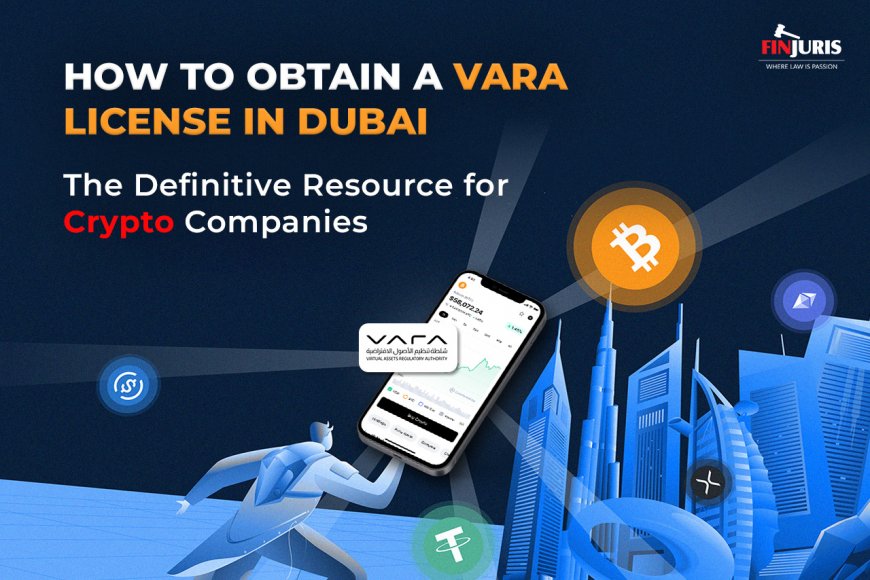
How to Obtain a VARA License in Dubai: The Definitive Resource for Crypto Companies
Dubai is an example of how progressive a jurisdiction can be when it comes to regulating digital assets. While many nations still debate how to regulate cryptocurrency, Dubai has acted very quickly and established the Virtual Assets Regulatory Authority (VARA) which is a dedicated regulator that oversees the activities of virtual assets service providers.
Dubai is an example of how progressive a jurisdiction can be when it comes to regulating digital assets. While many nations still debate how to regulate cryptocurrency, Dubai has acted very quickly and established the Virtual Assets Regulatory Authority (VARA) which is a dedicated regulator that oversees the activities of virtual assets service providers.
A VARA licence is critical for crypto exchanges, custodians, wallet providers, token issuers, brokers and other Web3 companies that want to legally operate in Dubai excluding the Dubai International Financial Centre (DIFC).
Our complete guide to Getting your VARA Licence provides everything you need to know about getting your VARA licence in Dubai including eligibility, licensing categories, required documents, compliance expectations, application timelines and fees, as well as strategic considerations.
What is VARA Dubai?
Dubai's Virtual Assets Regulatory Authority (VARA) is responsible for the regulation of Virtual Asset Service Providers (VASPs) in Dubai. VARA operates within the larger regulatory framework for Dubai's digital assets and VASPs are required to meet a wide range of conditions to do business in Dubai, including but not limited to:
- Compliance with anti-money laundering laws
- Consumer protection
- Risk management
- Investor protection
- Financial transparency
Unlike fragmented regulatory environments elsewhere, VARA provides clarity. It defines licensing categories, compliance obligations, and operational standards for crypto firms.
This clarity is one of Dubai’s biggest competitive advantages.
Why Get A VARA License in Dubai?
Some reasons that crypto companies have decided to set up shop in Dubai are:
Regulatory Legitimacy:
Conducting business without regulations is becoming progressively riskier. Now, banks and institutional investors want proof that an organization has handled issues of risk and compliance through regulations. Hence, if your company has a VARA license from Dubai, this can demonstrate your compliance with these required regulations.
Banking and Payment Access:
It is significantly easier for banks to onboard crypto companies into their systems when those companies are regulated by a known regulatory authority. If a bank can see that your company has a VARA license, it is more likely that that institution will approve your business to establish a banking relationship.
Global Strategic Location:
Dubai connects Europe, Asia, and Africa - creating a unique opportunity to begin providing its products and services from a jurisdiction that is recognized globally.
Favourable Tax Environment:
The UAE provides a very competitive corporate tax structure and there is no such thing as a personal income tax in the UAE. This makes the UAE a fantastic place for founders and executives to work.
Institutional Friendly Ecosystem:
The government of Dubai is pursuing blockchain and Web3 initiatives through free zones and innovation hubs - making the city of Dubai a hub for those who want to develop and build in either of those spaces.
Accordingly, if you are a serious player in crypto, you must view VARA licencing as something that is strategic as opposed to optional.
Who Should Get A VARA License?
If you are going to open a new business that involves any of the following types of activity in Dubai, you may need to obtain a VARA License for your business:
- A cryptocurrency exchange
- Brokerage or brokerage services
- The custody of cryptocurrency
- A virtual asset trading platform
- Assisting with the issuance of Tokens
- Advisory Services related to digital assets
- Portfolio Management of Digital Assets
- Staking Services (subject to applicable regulations)
If you touch client virtual assets or funds, you should assume you will need to get your license.
Types of VARA Licenses
VARA classifies licenses based on the type of activities they will support. It is important to select the appropriate type of VARA license.
#1. Virtual Asset Exchange Services
This license provides approval for virtual asset exchange companies which have the ability to match buy and sell orders to trade virtual assets.
#2. Broker-Dealer Services
The broker-dealer service license allows for intermediaries, such as brokers or dealers, to facilitate transactions involving virtual assets by providing services to their clients.
#3. Custody Services
The custody service license provides approval for entities to custody the digital assets of their clients.
#4. Advisory Services
The advisory service license allows for businesses to provide investment advice regarding virtual assets.
#5. Virtual Asset Lending and Borrowing
The lending and borrowing service license provides approval for companies that offer credit services through the use of virtual assets.
#6. Transfer And Settlement Services
The settlement service license provides approval for companies that transfer virtual assets between parties.
For each specific type of VARA license, the capital requirements, compliance requirements, and supervisory expectations will vary.
Step-by-Step Process to Obtain a VARA License
Phase 1: Scheduling A Business Model Evaluation
Prior to submitting any application, you need to:
- Understand the business model better.
- Determine what you intend to do.
- Calculate how much capital you will need for your business plan.
- Analyze your business governance scenario.
- Identify your resources available for compliance with the law.
Several applicants fail in phase 1 because they rush to submit their application.
You should answer these questions:
- Will you provide custody of your clients' assets?
- Will you provide means to allow your clients to convert into traditional currency (fiat)?
- Will you serve individual clients or institutional clients?
- Will your business function on a worldwide scale?
- Clarity with the above will help ensure you are able to comply with the regulations.
Phase 2: Set-up your UAE company
You cannot submit an application if your business does not have a legal business in the United Arab Emirates.
Majority of crypto related companies register within:
- Dubai mainland
- Relevant Dubai free zones
Important items required within the structure of your business:
- Registered Address
- Registered Directors and Shareholders
- Ultimate Beneficial Owners Disclosure
Regulations are looking for true ownership and transparency from their companies.
Phase 3: Creating a Compliance Infrastructure
This phase is the most important.
A strong compliance infrastructure is one of VARA's requirements and must include the following:
- AML/CFT Policy
Must Include:
- Risk-Based Customer Due Diligence
- PEPs (Politically Exposed Persons) Screening
- Sanctions Monitoring
- Ongoing Transactions Monitoring
- Process for Reporting Suspicious Transactions
- KYC Framework
Must Include:
Clearly Defined Onboarding Processes, i.e.
- Identity Verification
- Risk Scoring
- Enhanced Due Diligence (EDD) When Required
- Risk Management Policy
Must Include the Following Types of Risks:
- Operational Risks
- Cybersecurity Risks
- Liquidity Risks
- Custodial Risks
- Governance Risks
- Cybersecurity Controls
Technical Safeguards Must Be Considered:
- Cold Storage Policy
- Multi-Signature Wallets Requirement
- Incident Response Plan
- Penetration Testing Requirement
- Data Protection Standards
- Internal Controls and Governance
Must include the following:
- Appointment of a Compliance Officer
- Appointment of a MLRO (Money Laundering Reporting Officer)
- Independent Audit Function
Without compliance being built properly, the probability of receiving approval is unlikely.
Phase 4: Prepare To Apply
Your application must have:
- A detailed business plan.
- Projected financial statements.
- Compliance manuals.
- Corporate information such as articles of incorporation.
- Shareholder disclosures.
- Technical infrastructure documents.
- Governance information.
The regulators will be evaluating the following:
- Your financial sustainability.
- Management competency.
- Risk awareness.
- Reliability of your technology.
- Consumer protection measures.
You should expect to answer additional questions from the regulators - please be responsive and provide full disclosure.
Phase 5: Review By the Regulators
VARA will review your application.
- They will also ask you for clarifications if necessary.
- They may also conduct interviews with founders.
- They will also evaluate the fitness/propriety of your directors.
- They will also assess your capital adequacy.
They may request:
- Additional documents.
- Demonstrations of your systems.
- Revised compliance controls.
Depending on how complicated your application is, this phase can take anywhere from weeks to months to complete.
Phase 6: In-Principle Approval (IPA)
If VARA has determined that you operate in compliance with regulations, you will typically receive the In-Principle Approval.
This means the following:
- Your framework will be accepted as being appropriate.
- You will finalize the readiness to begin operations.
- You will meet all remaining conditions.
A full licence will only be granted once all final conditions have been met.
Phase 7: Final License and Launching of Operations
Once approved you must:
- Pay total regulatory fees.
- Comply with all onboarding requirements.
- Activate compliance monitoring.
- Start supervised operations.
The issuance of a license is not the end of regulation. Rather, supervision will continue.
Capital Requirements
Capital requirements as established by the Virtual Asset Regulatory Authority (VARA) are not made available publicly as a single amount for each license type within the authority’s multiple business categories.
The amount of capital that licensees are required to hold varies by:
- License Type
- Type and Scope of Operations
- Amount of Custody Exposure
- Volume of Transactions
- Risk Profile of Business
In general, businesses performing exchange and custody services require the highest amount of capital to support their operations; therefore, companies should always be prepared for discussions regarding capital adequacy with VARA.
Ongoing Compliance Obligations
Once a company has been licensed by VARA, they will be required to provide the following:
- Regular Reports
- AML Monitoring
- Board Oversight
- Regulatory Notification
You will be required to submit to VARA notification of the following:
- Any change in ownership that is considered to be material
- Any material change to how your business operates
- Any change to key personnel
- Any breach of data security
If you fail to meet these regulatory compliance requirements you could be subject to:
- Monetary fines (based upon severity)
- Suspension of operations
- Revocation of your license
Timeline Expectations
Total estimated timeline: 4–6 months
Complex exchange businesses may take longer.
Avoid Common Mistakes
- Forgetting to Comply with Requirements: A common misconception is that VARA is a "light touch" regulator however, the AML and Governance requirements are tough and should be always adhered to.
- Poorly Documenting Your Operations: Typically, the use of generic templates will not work.
- Employing an Inexperienced AML Officer: Your money laundering reporting officer (MLRO) needs to know the rules relating to regulated firms in the United Arab Emirates before applying to operate under VARA.
- Failing to Provide Adequate Security Documentation: All cyber controls should be adequately documented.
- Not Having Enough Capital: You need to be able to demonstrate financial viability.
What You Should Consider Before You Submit
Ask yourself these questions prior to submitting your application:
- Will you be able to support ongoing supervision by VARA?
- Are you able to perform all of the compliance obligations internally?
- Is your technology audit-ready?
- Can you meet all reporting obligations?
- Are your investors okay with disclosure transparency?
Regulatory compliance will be a lengthy process.
For serious crypto businesses looking to scale globally with credibility, Dubai’s regulatory clarity provides a competitive advantage. However, success requires preparation. The companies that succeed are those that treat compliance as infrastructure- not an afterthought. If your goal is long-term sustainability, institutional partnerships, and global trust, a VARA license may be one of the strongest foundations you can build.
What's Your Reaction?