Tokenized Real Estate in Dubai: Understanding VARA Compliance
Learn how tokenized real estate is regulated in Dubai under VARA. Understand licensing, compliance requirements, SPV structures, and investor protections.
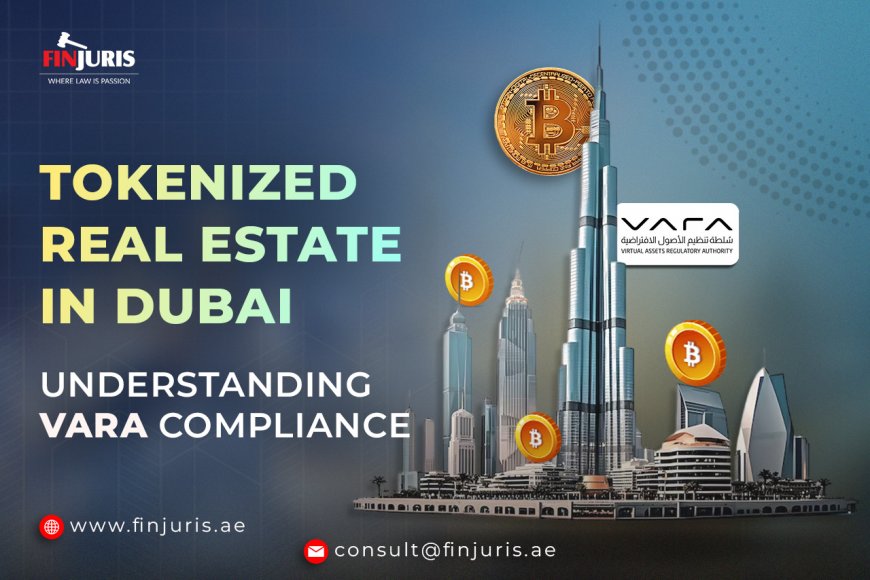
Real estate tokenization has rapidly moved from experimental concept to real commercial practice. It offers fractional ownership, improved liquidity, and digital transferability of property interests. Until recently, however, regulatory clarity for tokenized real estate in Dubai remained limited. That changed in 2025 when the Virtual Assets Regulatory Authority introduced a dedicated framework that now governs tokenized real estate under the category of Asset Referenced Virtual Assets. With this development, Dubai has taken a significant step toward legitimizing and supervising digital representations of real-world assets.
This article explains the compliance requirements for tokenizing real estate under VARA, the licensing process, ongoing operational obligations, legal structuring considerations, investor protections, and the practical steps involved in launching a tokenized property project.
A New Regulatory Landscape for Tokenized Real Estate
VARA’s expansion of its regime to cover tokenized real estate marks a turning point. By placing real estate backed tokens within its Asset Referenced Virtual Asset category, the authority now treats them as regulated instruments. This aligns tokenized property with other virtual asset activities such as issuance, custody, and broker dealer services.
The change brings clarity to an area that once operated in grey space. For developers, platforms, and investors, the message is clear. Tokenization is possible and encouraged, but only within a tightly controlled regulatory perimeter. Dubai Law No. 2 of 2022 and related cabinet resolutions now tie virtual asset activities to formal licensing, detailed disclosure, and structured oversight.
Licensing Requirements for Tokenized Real Estate Issuers
Any project intending to issue, distribute, store, or manage tokenized real estate products must secure the relevant VARA approvals. Tokenization activities typically fall into several regulated categories. These include issuance of asset referenced tokens, broker dealer functions such as marketing and distribution, custody and safekeeping of digital assets, and transfer and settlement activities that govern the movement of tokens between users.
Operating a secondary market is optional but, if offered, requires additional licensing. Only VARA supervised exchanges may facilitate trading of tokenized real estate.
The licensing process is rigorous. Applicants must prepare a detailed business plan, complete with three year financial projections, technical architecture, compliance policies, cybersecurity frameworks, risk assessments, and documentation describing the legal structure of the product. These materials undergo extensive review and the approval timeline often ranges from three to six months.
Capital requirements are also a major factor. Depending on the category of activity, applicants must demonstrate sufficient financial resources to operate safely. Issuers must also budget for ongoing compliance, annual audits, technology upgrades, and reporting obligations.
Read More - Real Estate Tokenization: Revolutionizing Property Investment
Ongoing Compliance and Operational Duties
Licensing is only the beginning. Once a tokenized real estate project becomes operational, continuous compliance becomes essential. The core areas include disclosures, anti money laundering controls, reporting, and internal governance.
Investor Disclosure Obligations
Transparency is a central expectation. Issuers must provide comprehensive information about the underlying property, valuation methodologies, ownership structure, projected income, operational costs, and the mechanics of how tokens function. These disclosures must be updated throughout the life of the project. A whitepaper or offering document is typically the primary medium for communicating these details.
Investors must understand what rights they receive, how income will be distributed, the risks involved, and how tokens can be redeemed or transferred. Clear and accurate disclosures are not optional but mandatory.
Read More: Tokenization of Real Estate Assets – The Future of Property Investment
AML and CFT Requirements
Tokenized real estate can involve significant transaction volumes and international participants. As a result, AML and CFT measures are strict. Issuers must conduct customer due diligence, verify source of funds, maintain transaction records for at least six years, and operate monitoring systems that identify suspicious behavior. A dedicated Money Laundering Reporting Officer must oversee the program and maintain direct communication with regulators.
Reporting to VARA
Projects must file recurring reports. Monthly submissions outline all token movements including issuances and transfers. Quarterly submissions confirm asset backing, verify reserves, and provide updated financial data. Any significant incident, such as a cybersecurity breach or material change to the underlying asset, must be reported promptly. Annual compliance statements signed by senior management are also required.
These reporting duties ensure that tokens remain properly backed and that investors are protected from concealed risks.
Read More - Navigating the VARA Licensing Process in Dubai: A Step-by-Step Guide
Legal and Structural Considerations
Tokenization requires more than blockchain technology. The legal foundation must be solid, especially since property ownership in the UAE is governed by real estate law and formal land registration requirements.
SPV Ownership Models
The most common structure involves forming a Special Purpose Vehicle. The SPV holds legal title to the property. Tokens represent proportional interests in the SPV rather than direct ownership of the property itself. This approach avoids the need for every token holder to be registered individually with the local land authority.
The SPV must maintain share registers and reconcile them with the token ledger. The relationship between on chain ownership and real world legal title must remain aligned at all times. Smart contracts and shareholder agreements must support this reconciliation process.
Rights of Token Holders
Token holders ordinarily receive economic rather than physical rights. These may include entitlement to rental income, a share of proceeds upon sale of the property, or participation in certain governance decisions concerning the SPV.
The scope of governance rights varies. Some issuers permit voting on major decisions such as property disposal, refinancing, or changes in management. Others restrict voting to major stakeholders. Regardless of the model chosen, rights must be precisely described in the offering documentation and implemented consistently through both legal agreements and smart contracts.
Secondary Market Trading
Secondary trading is one of the most attractive features of tokenized real estate. It offers liquidity in a traditionally illiquid asset class. However, secondary trading is only allowed on licensed platforms. Orders, pricing mechanisms, and liquidity arrangements must meet regulatory standards. Market manipulation controls, transparency requirements, and free float thresholds are typically imposed to protect investors.
Risks of Poor Compliance
Tokenized real estate carries meaningful risks if not properly regulated. If the issuer fails to maintain asset backing or does not reconcile token balances with legal ownership records, disputes can arise that jeopardize investor interests. Weak disclosures can mislead buyers and expose issuers to penalties or civil claims. Inadequate AML controls could result in serious regulatory action. Ill designed smart contracts could create vulnerabilities that enable loss or theft of tokens.
The integrity of a tokenized real estate project depends not just on advanced technology, but on disciplined legal, operational, and regulatory practices.
Practical Roadmap for Launching a Compliant Project
A team preparing to tokenize real estate under VARA can follow a structured process:
- Incorporate an SPV that will hold legal title to the property and prepare governance documents.
- Produce a full business plan, legal structure analysis, tokenomics design, risk assessment, and financial model.
- Develop smart contracts that reflect token rights, enforce transfer restrictions, and integrate with compliance controls.
- Establish AML, CFT, and KYC procedures and appoint an MLRO.
- Apply for the appropriate VARA licence categories for issuance, custody, settlement, and potentially exchange services.
- Conduct technology audits, cybersecurity reviews, and legal audits of all documentation.
- Prepare the whitepaper and investor materials and ensure they meet all disclosure obligations.
- Integrate banking, fiat on and off ramps, and custody infrastructure.
- Launch with continuous reporting, regular audits, and ongoing updates for investors.
- Build or partner with a regulated secondary marketplace once liquidity and compliance requirements are met.
This roadmap helps teams anticipate the regulatory workload and budget appropriately.
Benefits for Developers and Investors
If executed properly, tokenized real estate unlocks advantages that traditional real estate structures cannot easily match.
Fractional ownership expands access to high value property and allows smaller investors to participate. Liquidity improves as tokens can be transferred or traded without the long timelines associated with property transactions. Transparency increases because blockchain records provide verifiable transaction history. Global participation becomes easier because onboarding and compliance can be conducted digitally. At the same time, regulatory supervision through VARA reduces risk and strengthens trust.
For developers, tokenization can open new fundraising channels, reduce reliance on debt, and increase project visibility. For investors, it introduces a regulated method to gain exposure to Dubai real estate without the hurdles of traditional ownership.
Challenges and Considerations
Despite the opportunities, tokenized real estate is not simple. Compliance implementations can be costly and technologically demanding. Liquidity is not guaranteed and depends on user adoption, market participation, and exchange infrastructure. Regulatory expectations may evolve, requiring ongoing adjustments. Investor education is also a major factor because many potential buyers remain unfamiliar with digital assets and token-based ownership structures.
Legal alignment between digital records and real-world title is critical. Any inconsistency between token ownership and SPV records can become a source of conflict. Thorough legal drafting and reliable reconciliation procedures are essential.
Tokenized real estate offers a compelling vision for the future of property investment. It blends the stability of physical assets with the efficiency of digital infrastructure. Dubai’s regulatory framework now provides a clear and structured path to bring these products to market. At the same time, VARA’s rules make it clear that professionalism, transparency, and compliance are mandatory.
For developers, investment firms, and technology companies, this is an opportunity worth exploring, but it demands careful planning, strong legal grounding, and disciplined execution. For investors, it opens a new way to access one of the world’s most dynamic real estate markets through regulated digital instruments.
If you would like, I can also produce a shorter version suitable for LinkedIn or a more technical version targeted at legal and compliance professionals.
Finjuris is a UAE-based legal and regulatory advisory firm specializing in virtual assets, digital finance, and emerging financial technologies. We advise developers, investment platforms, fund managers, and financial institutions on navigating complex regulatory frameworks governing blockchain-based business models in the UAE and other forward-looking jurisdictions.
What's Your Reaction?