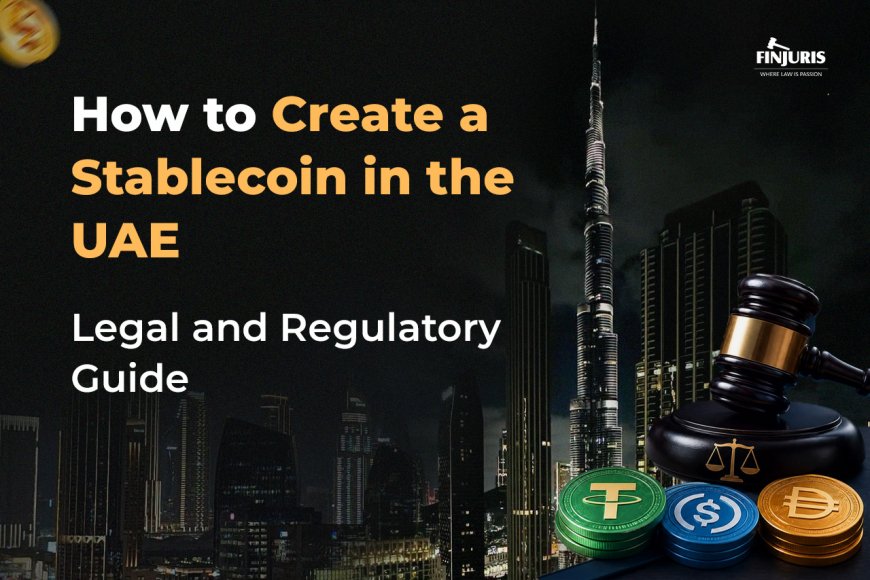
How to Create a Stablecoin in the UAE: Legal and Regulatory Guide
Stablecoins have emerged as one of the key innovations within the digital asset space.
Stablecoins have emerged as one of the key innovations within the digital asset space. While other cryptocurrencies demonstrate high price fluctuations, stablecoins provide users with stable coins based on the peg to certain fiat money or assets. The widespread use of stablecoins has significantly changed cross-border payments, treasury services, DeFi, institutional settlement transactions, and tokenized financial instruments.
As one of the leaders in the field of digital assets, the United Arab Emirates developed a clear regulatory framework rather than scattered guidance. Nowadays, entrepreneurs, fintechs, banks, and Web3 companies prefer to establish their operations in the UAE in order to issue compliant stablecoins.
Nevertheless, today issuance of a stable coin is not only a technical activity but also a licensed financial process, which involves planning, obtaining permits, governance, managing reserves, and regulatory compliance. Depending on the location of issuing a stablecoin and its purposes, a company should obtain the respective permissions from either the Central Bank of the UAE, the VARA in Dubai, or the Financial Services Regulatory Authority (FSRA) in ADGM.
Stablecoins Explained
A stablecoin is a type of digital asset whose value is pegged to another external asset so that its value stays relatively steady.
The various types include:
- Fiat-collateralized stablecoins
- Commodity-collateralized stablecoins
- Crypto-collateralized stablecoins
- Algorithmic stablecoins
In light of current regulations, the fiat-collateralized type of stablecoin is the most popular because of the transparency it provides.
An example would be a stablecoin that is backed by USD, which has one dollar of reserves for every token issued.
Why UAE Has Emerged as an Ideal Jurisdiction
UAE has been promoting innovation while setting up regulatory standards for virtual assets.
There are several reasons why the UAE is considered an attractive jurisdiction:
- Proactive digital asset legislation
- Recognized AML/CFT system on an international level
- Cryptocurrency regulators
- Increasing institutional adoption
- Established banking sector
- Tokenization and digital payments support
Unlike other countries, which lack stablecoin legislation, UAE has implemented separate regulations for payment tokens, fiat referenced virtual assets, and digital asset service providers.
Choosing the Appropriate Regulatory Jurisdiction
Prior to commencing the licensing journey, it is necessary to determine the place where the business plans to establish its operations.
UAE Mainland
The Central Bank is responsible for regulating payment tokens that are meant for payment services within the UAE.
If the stablecoin is meant for payment service or retail payments, then the issuer is likely to fall under the Central Bank’s jurisdiction.
The Payment Token Services Regulation (PTSR) regulates payment token issuance, reserve management, redemption obligations, governance and operational resilience. Payment tokens that reference the AED are regulated by the Central Bank, whereas the approved foreign payment tokens are allowed to be used in cases only.
Dubai (VARA)
VARA regulates activities related to virtual assets within Dubai (except DIFC).
If the stablecoin is involved in the virtual asset ecosystem in which there is exchange, broker-dealer, custody or another type of virtual asset services, then VARA licensing requirements may apply.
VARA regulates the following areas:
- Consumer protection
- Market integrity
- Governance
- Technology risk
- Compliance
- Operational resilience
ADGM
Digital asset activities in ADGM are regulated by the Financial Services Regulatory Authority (FSRA).
The regime is designed in such a way that regulated issuance and use of fiat-referenced tokens is possible within certain financial services permissions.
Step 1: Define the Stablecoin Business Model
The first step in the license application process is to define the stablecoin business model.
Regulators will need to know more about:
- Currency referenced
- Make-up of reserve assets
- Redemption policy
- Token issuing arrangement
- Intended users
- Geographic reach
- Technology arrangements
- Governance
This will determine the applicable regime.
Step 2: Set Up the Legal Entity
The issuer will be required to set up an appropriate legal entity in the selected jurisdiction.
The legal entity will include:
- Corporate governance
- Directors
- Compliance officers
- Risk officers
- Internal audit
- Technology governance
The regulators check whether the management team is qualified enough to run a regulated financial institution.
Step 3: Getting Regulatory Approval
Getting stablecoin licensing UAE is much more complex than simply applying for it.
Applicants are expected to supply:
- Business plan
- Financial forecasts
- Governance structure
- Compliance guidelines
- AML/CFT policy
- Risk management guidelines
- Technology framework
- Cybersecurity guidelines
- Reserve management guidelines
- Consumer disclosure policy
- Operating procedures
Regulators carry out a thorough assessment before giving approval.
Step 4: Reserve Management Structure Design
One of the most significant areas of compliance for stablecoins UAE is the design of the reserve management system.
It should be able to demonstrate that there is always the possibility of exchanging the assets by those who own the tokens.
Important aspects include:
- Full reserve backing
- Asset isolation
- Custodian management
- Liquidity management
- Reconciliation every day
- Independent verification
A lot of attention is paid to reserve management by regulators due to its direct influence on financial stability and confidence of consumers.
Step 5: Anti-Money Laundering and Financial Crime Compliance
Anti-money laundering requirements for the stablecoins UAE are strict.
Generally, compliance programs include:
- Customer Due Diligence
- Enhanced Due Diligence
- Screening for Politically Exposed Persons
- Sanctions screening
- Monitoring transactions
- Suspicious activity reports
- Record Keeping
- Travel Rule compliance where relevant
- Ongoing monitoring of customers
The UAE continues to improve its AML system according to FATF requirements.
Step 6: Establish Robust Governance
Regulatory bodies are shifting their emphasis to governance rather than simply technology.
A compliant token must have in place:
- Board governance
- Compliance committee
- Risk committee
- Internal audit program
- Information security governance
- Incident reporting
- Business continuity
Robust governance shows that the stablecoin will be secure at all stages in its life cycle.
Step 7: Secure the Technology
Despite the stablecoins using blockchain technology, regulators look at the security of the whole system in which it operates.
Important controls are:
- Smart contract reviews
- Penetration testing
- Key management
- Multi-signature wallets
- Secure storage
- Disaster recovery
- Infrastructure redundancy
- Cyber incident response
Technology problems can very quickly turn into regulatory problems when it comes to customers' funds.
Consumer Protection Requirements
Regulators require stablecoin issuers to be transparent with their users.
This requirement is about making transparent disclosures of:
- Redemption terms
- Reserve currencies
- Fees
- Operating risks
- Technology risks
- Bankruptcy regime
- Complaints procedure
False claims about stability or reserves may face regulatory scrutiny.
International Implications
Many firms want to issue a stablecoin in the UAE but for international purposes.
International operations have added regulatory requirements for such companies.
These involve assessing:
- Foreign licenses
- Securities laws
- Payments regulations
- Consumer protection requirements
- Data privacy rules
- Taxation issues
- International AML compliance
Being approved to issue in the UAE does not mean automatic approval in other countries.
Challenges
Launching a compliant stablecoin comes with many practical challenges.
Some of them are:
- Identifying the right regulator
- Choosing the right reserve system
- Finding banking connections
- Meeting governance requirements
- Deploying institutional grade cyber security
- Ensuring redemption liquidity
- Compliance
There are many who fail to understand the operation requirements which go way beyond blockchain coding.
Stablecoins in the UAE’s Future
The UAE is continuously adding to its digital asset landscape via coordinated regulation from the Central Bank, VARA, and ADGM.
With new initiatives such as the introduction of the Payment Token Services Regulation, expanding the ADGM’s fiat-based token system, and the approval of payment token issuers, the UAE is showing its dedication towards building a trusted digital payments network.
With increased institutional participation, it is anticipated that stablecoins within a regulatory environment will become integral in:
- Cross-border settlements
- Tokenized securities
- Treasury services
- International trade
- Digital banking
- Corporate blockchain solutions
Firms which establish themselves now in compliance will be well-positioned to benefit from this changing world of finance.
In becoming one of the leading destinations for stablecoin issuers, the UAE has introduced an effective regulatory regime that fosters innovation and sets very high standards in terms of financial stability and consumers' rights protection. Depending on whether businesses operate under the Central Bank, VARA, or ADGM, it is vital to create projects on the basis of compliance and proper legal framework.
Successfully obtaining stablecoin licensing UAE presupposes the fulfillment of certain actions that go far beyond launching a digital token. Creating suitable governance structures, applying proper reserve management policies, introducing effective AML/CFT mechanisms, and complying with all regulations is the key to success not only in satisfying the regulator's needs but also in ensuring a long-term perspective of the project.
For businesses that want to introduce stablecoins into the UAE market, it is important to be ready to follow the compliance-first principle. Having understood all the requirements and having focused on stablecoin compliance UAE at the early stage, issuers will be able to gain trust and enjoy sustainable development in the UAE's fast-evolving digital assets market environment.
What's Your Reaction?