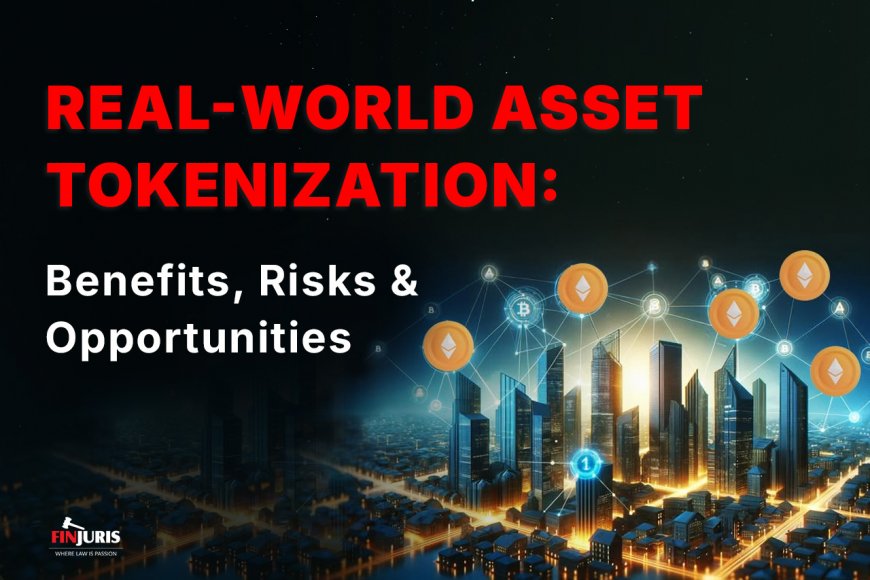
Real-World Asset Tokenization: Benefits, Risks & Opportunities
Today, one of the fastest-growing areas of digital finance is real-world asset (RWA) tokenization, where physical or traditional financial assets are represented digitally on a blockchain.
Blockchain technology has evolved far beyond cryptocurrencies.
Today, one of the fastest-growing areas of digital finance is real-world asset (RWA) tokenization, where physical or traditional financial assets are represented digitally on a blockchain.
Tokenization is changing the way we deal with all kinds of assets, from real estate and private equity to commodities, bonds, artwork, and even big infrastructure projects. It's making it easier for people to buy, sell, and own a piece of these assets. This new way of doing things is transforming how assets are created, traded, and managed.
As governments and regulators increasingly explore digital asset frameworks, tokenization is expected to play a significant role in the future of capital markets.
This article explains what real-world asset tokenization is, how it works, its benefits, risks, and why businesses are increasingly exploring tokenized investment opportunities.
What Is Real-World Asset Tokenization?
Real-world asset tokenization refers to the process of creating a digital representation (or token) of an existing physical or traditional financial asset on a blockchain.
The token represents certain rights or interests associated with the underlying asset, depending on the legal structure adopted.
Examples of assets that may be tokenized include:
· Real estate
· Commercial property
· Private equity
· Company shares
· Investment funds
· Government bonds
· Corporate bonds
· Commodities such as gold
· Carbon credits
· Infrastructure projects
· Fine art
· Collectibles
Rather than transferring paper-based ownership records, blockchain technology enables the ownership interests to be recorded digitally through tokens.
Read More: Real World Asset Tokenization in the UAE: Legal and Regulatory Requirements
How Does Asset Tokenization Work?
Although every project differs, the process generally follows several stages.
Step 1: Identify the Asset
The first step is identifying the asset to be tokenized.
Examples include:
· Apartment buildings
· Office towers
· Renewable energy projects
· Investment funds
· Precious metals
· Debt instruments
The asset is first evaluated from both a commercial and legal perspective.
Step 2: Establish the Legal Structure
Perhaps the most important step is determining what exactly the token represents.
The token may represent:
· Ownership interests
· Beneficial interests
· Shares in a company
· Fund units
· Contractual rights
· Revenue-sharing rights
The legal rights attached to the token are often more important than the technology itself.
Step 3: Create the Digital Tokens
Once the legal structure has been established, blockchain technology is used to issue digital tokens representing the defined rights.
These tokens are typically created using smart contracts that automate issuance, transfers, and certain administrative processes.
Step 4: Distribution to Investors
The issued tokens may then be offered to eligible investors, subject to applicable securities laws and regulatory requirements.
Depending on the jurisdiction and the nature of the token, offerings may be limited to institutional investors, qualified investors, or retail investors.
Read More: What Is Real-World Asset (RWA) Tokenization? A Complete Guide
Benefits of Real-World Asset Tokenization
The growing interest in RWA tokenization is driven by several potential advantages.
Increased Liquidity
Traditionally illiquid assets, such as commercial real estate or private equity, may become easier to transfer through tokenized ownership structures.
While liquidity ultimately depends on market demand and regulatory constraints, tokenization has the potential to improve secondary market accessibility.
Fractional Ownership
Instead of purchasing an entire property or investment, investors may acquire smaller fractional interests represented by digital tokens.
This can reduce investment barriers and broaden participation.
Improved Operational Efficiency
Blockchain technology can streamline certain administrative processes by maintaining a transparent and tamper-resistant record of transactions.
Using smart contracts can really help with automating certain tasks, which means less manual work is needed. This can make things easier and more efficient.
Greater Transparency
Blockchain technology gives us a clear and trustworthy record of all transactions, making things more open and honest. This helps businesses run more smoothly and keeps records organized.
Faster Settlement
New ways of settling transactions online can speed things up compared to older systems, especially when rules and laws allow for blockchain technology to be used for transferring money. This can make a big difference in how fast things get done.
Which Industries Are Using RWA Tokenization?
Tokenization is expanding across multiple sectors, including:
· Real estate
· Private credit
· Investment funds
· Precious metals
· Trade finance
· Carbon markets
· Infrastructure financing
· Supply chain finance
· Treasury products
· Intellectual property licensing
As regulatory frameworks continue to evolve, adoption is expected to increase across both financial and non-financial industries.
Risks of Real-World Asset Tokenization
While real-world asset tokenization offers significant opportunities, businesses should also understand the legal, regulatory, and operational risks involved.
Regulatory Uncertainty
One of the biggest challenges is that regulatory frameworks continue to evolve across many jurisdictions.
The type of rules that apply to a tokenized asset can vary a lot, depending on what the token is for and what rights it gives to the person who owns it. It might be treated like a security, or maybe like a special kind of investment product, or even like a virtual asset or a way to make payments. Really, it could be regulated in many different ways, depending on what it's used for and how it works.
Businesses should assess the applicable legal framework before launching any tokenization project.
Legal Structuring Risks
Technology alone does not determine ownership.
What really counts is the legal rights that come with the token.
If the legal documentation is unclear, investors may face uncertainty regarding:
· Ownership rights
· Voting rights
· Distribution rights
· Redemption rights
· Transfer restrictions
· Enforcement rights
A well-planned legal framework is essential for any tokenization project to succeed.
Technology and Cybersecurity Risks
Like all blockchain-based projects, tokenized assets remain exposed to technology-related risks, including:
· Smart contract vulnerabilities
· Cybersecurity incidents
· Private key management failures
· Wallet security issues
· System outages
· Third-party technology failures
Businesses should implement robust cybersecurity, governance, and operational resilience measures to mitigate these risks.
Liquidity Risk
Tokenization has the potential to improve liquidity, but it does not guarantee it.
The ability to sell a token depends on several factors, including:
· Investor demand
· Market infrastructure
· Regulatory restrictions
· Exchange availability
· Transfer limitations
A tokenized asset may still be difficult to sell if an active secondary market does not exist.
Regulatory Considerations
Businesses planning to tokenize real-world assets should carefully assess the applicable regulatory requirements before issuing tokens.
Key considerations include:
· Securities laws
· Virtual asset regulations
· AML/CFT requirements
· Investor protection rules
· Licensing obligations
· Custody arrangements
· Disclosure requirements
· Data protection laws
· Tax implications
The applicable legal framework will vary depending on the jurisdiction, the underlying asset, and the rights attached to the token.
Obtaining legal advice at an early stage can help businesses identify the appropriate regulatory approach and reduce compliance risks.
Opportunities for Businesses
Real-world asset tokenization presents opportunities across numerous industries.
Examples include:
Real Estate
Developers can explore tokenization to facilitate fractional ownership structures and broaden access to investment opportunities, subject to applicable laws.
Private Markets
Private equity and venture capital investments may become more accessible through appropriately structured tokenized offerings.
Investment Funds
Fund managers are increasingly exploring tokenized fund structures to improve operational efficiency and investor access.
Commodities
Gold, silver, and other commodities may be represented digitally, enabling more efficient ownership and transfer mechanisms.
Infrastructure Projects
Tokenization may support innovative financing models for renewable energy, transportation, and infrastructure developments.
As regulatory frameworks continue to mature, businesses are expected to identify additional commercial applications for tokenized assets.
Why Legal Structuring Matters
Many businesses focus primarily on blockchain technology.
However, the success of a tokenization project depends just as much on its legal framework.
Businesses should carefully consider:
· What legal rights the token represents.
· Whether licensing is required.
· The appropriate corporate structure.
· Investor eligibility requirements.
· Compliance with securities and virtual asset laws.
· AML/CFT obligations.
· Governance arrangements.
· Contractual documentation.
A well-structured legal framework provides greater certainty for issuers, investors, and regulators while supporting long-term sustainability.
Real-world asset tokenization has the potential to reshape traditional financial markets by improving accessibility, operational efficiency, and investment opportunities.
However, successful tokenization requires much more than blockchain technology. Businesses must carefully consider legal structuring, regulatory compliance, governance, cybersecurity, and investor protection throughout the lifecycle of the project.
Frequently Asked Questions
1. What is real-world asset tokenization?
Real-world asset tokenization is the process of creating blockchain-based digital tokens that represent rights or interests in physical assets or traditional financial assets.
2. What types of assets can be tokenized?
Things that are often broken down into smaller parts to be bought and sold include property, private investments, funds for investing, goods, bonds, big projects like roads and bridges, art, credits for reducing carbon emissions, and rights to ideas and creations.
3. What are the benefits of RWA tokenization?
Potential benefits include fractional ownership, improved operational efficiency, enhanced transparency, faster settlement, broader investor participation, and the possibility of increased liquidity.
4. Does tokenization automatically create liquidity?
No. While tokenization may facilitate transfers, liquidity ultimately depends on investor demand, market infrastructure, regulatory requirements, and the availability of secondary trading venues.
5. Are tokenized assets regulated?
The rules that apply to tokenized assets can vary depending on where you are and what kind of rights the token represents. In some places, these assets might be treated like securities, which means they have to follow certain laws. They might also be subject to regulations on virtual assets, as well as rules to prevent money laundering and the financing of terrorism. Additionally, there are other financial regulations that could apply.
6. What is the difference between tokenization and cryptocurrency?
Cryptocurrencies are basically digital money that exists only online, and they're used to make payments. On the other hand, tokenized assets are like special tickets that represent ownership or a claim to something in the real world, like a house or a stock. These tokens are connected to actual assets that you can touch or see, unlike cryptocurrencies which are just digital.
7. What industries are adopting asset tokenization?
Industries exploring tokenization include real estate, private equity, investment funds, commodities, trade finance, infrastructure, carbon markets, supply chain finance, and intellectual property.
8. What legal issues should businesses consider before tokenizing assets?
Businesses should assess ownership rights, securities regulation, licensing requirements, governance structures, AML/CFT obligations, investor disclosures, custody arrangements, taxation, and contractual documentation.
9. What are the main risks of real-world asset tokenization?
Key risks include regulatory uncertainty, legal structuring challenges, cybersecurity threats, smart contract vulnerabilities, operational risks, and limited secondary market liquidity.
10. Why should businesses seek legal advice before launching a tokenization project?
Legal advisors can help determine the appropriate regulatory framework, structure the transaction, identify licensing requirements, prepare compliant documentation, and ensure the project aligns with applicable laws while reducing legal and regulatory risks.
What's Your Reaction?