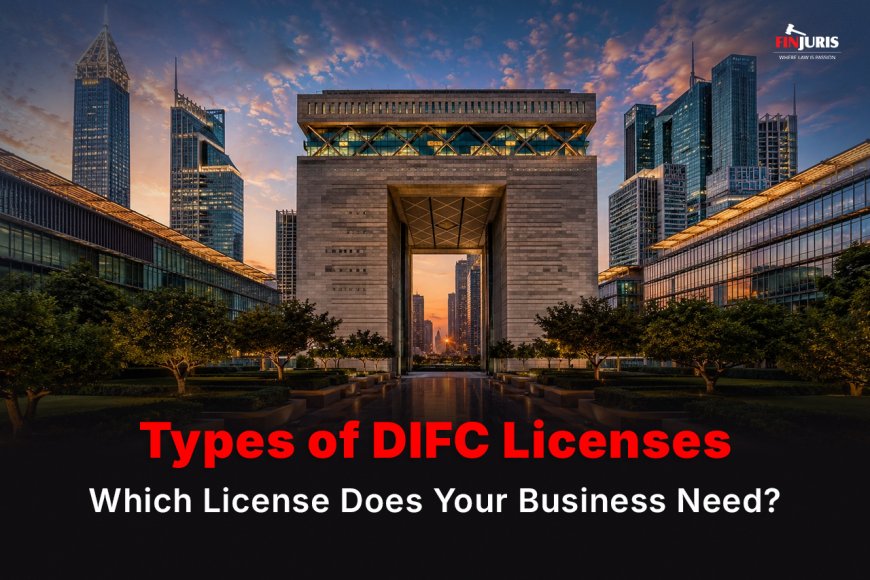
Types of DIFC Licenses: Which License Does Your Business Need?
Dubai International Financial Centre (DIFC) has been one of the leading financial centres of the world, drawing in banks, investment firms, fintech companies, professional service firms, family offices, holding companies, and multinational companies.
Dubai International Financial Centre (DIFC) has been one of the leading financial centres of the world, drawing in banks, investment firms, fintech companies, professional service firms, family offices, holding companies, and multinational companies.
First and foremost, among the decisions that businesses must make in setting up in DIFC is choosing the right kind of license. Getting the wrong type of license can lead to complications and delays during incorporation, even costing the company money.
This article will help you learn about various kinds of licenses that DIFC offers, the kind of businesses they are meant for, and how you can decide upon the right path for licensing.
Read More: How to Get a DIFC License in Dubai: Step-by-Step Guide
Understanding DIFC License Framework
Every business in DIFC does not get licensed in the same way.
There are two broad groups of businesses in DIFC:
● Those that need authorizations from DFSA; and
● Those that do not need authorization but get licensed from the DIFC Registrar of Companies.
This depends on the activities planned by the business.
1. DIFC Financial Services License
Firms involved in regulated financial services need a license issued by the Dubai Financial Services Authority (DFSA).
This includes:
● Financial advisory
● Asset management
● Wealth management
● Dealing in securities
● Brokerage services
● Banking
● Insurance
● Payment services
● Funds management
● Credit services
Firms in these industries will have to meet all the regulatory requirements for:
● Corporate governance
● Anti money laundering/combating the financing of terrorism
● Risk management
● Prudential requirements
● Internal controls
● Compliance
● Suitability of senior management
Firms licensed by DFSA continue to be supervised after they have received their licenses.
2. DIFC Commercial License
All businesses in DIFC do not provide regulated financial services.
Many firms register in DIFC under commercial license for engaging in non-regulated business activities.
This includes:
● Business consultancy
● Legal consultancy
● Management consultancy
● IT services
● Software development
● Marketing services
● Corporate advisory
● Holding company
● Intellectual property management
Even though these firms are not regulated by DFSA, they still have to abide by corporate laws, employment laws, data privacy laws, and other applicable laws of DIFC.
3. Holding Company License
Many multinational companies create holding companies through DIFC.
As the name suggests, a holding company will normally hold shares or investments in other companies without performing any regulated financial activity.
Holding companies are usually set up for:
● Structures of international companies
● In investment holdings
● Family businesses
● In asset ownership
● In regional headquarter structures
Depending on the purpose of the business, different advantages can be obtained through the use of such structures.
4. Innovation and Technology Businesses
DIFC has become an important place for fintech and innovation companies.
Some examples of technology companies within DIFC are:
● Fintech companies
● RegTech businesses
● Artificial Intelligence (AI) Companies
● Blockchain businesses
● Software as a Service (SaaS) providers
● Cybersecurity firms
It will not depend on the type of technology but rather on the services which determine whether DFSA authorisation is required.
For instance, a technology company which is developing financial technology may not need a financial services licence unless it performs regulated financial services.
5. Family Offices Structures
Family offices can also be licensed in DIFC.
Examples of entities set up by family offices are:
● Wealth preservation
● Investment management
● In succession planning
● Family governance
● Asset administration
Depending on whether regulated financial services are being provided to third parties.
Read More: What Is a DIFC License in Dubai? A Complete Guide for Investors
Which License is Required for Your Business?
Choosing the right license can be influenced by many aspects such as:
● The intended nature of business activities.
● Delivery of regulated financial services.
● Targeted customers.
● Ownership structure.
● Objectives of the company.
● Plans for future development.
It is important to consider these aspects prior to incorporating your company in order to prevent further changes.
Requirements for DIFC Licences
The requirements for obtaining a licence for a DIFC business depend on whether the entity intends to set up a regulated financial services firm or an unregulated commercial entity.
Generally, the process of obtaining a licence for a majority of applicants entails:
● Choosing the right business activity.
● Choosing the right legal entity.
● Reserving the name of the business.
● Incorporating the business.
● Getting the details about the business’s shareholders and Ultimate Beneficial Owners (UBOs).
● Setting up a physical office when necessary.
● Submitting the right licence application.
● Obtaining any further regulatory licences if required.
Businesses that wish to operate in the regulated financial services field should also meet the Dubai Financial Services Authority (DFSA) licence requirements.
Common Errors in Selecting a DIFC Licence
Choosing the right licence is a critical decision when incorporating a business.
Some of the common errors made include:
Believing That Every DIFC Company Needs a DFSA Licence
A lot of companies think that simply operating in the DIFC jurisdiction means having to obtain the DFSA authorisation.
However, only those offering regulated financial services need the DFSA licences. A lot of consulting, technology, holding, and professional services operate on the DIFC commercial license.
Selecting Incorrect Business Activities
Sometimes applicants end up choosing business activities that may not necessarily be correct.
This will lead to:
● Extra regulatory inquiries.
● Incorporation delays.
● Post-incorporation amendment of licence
● Unnecessary compliance.
Choosing the right business activity makes the whole application process smooth.
Choosing an Unfitting Legal Structure
Various legal structures have different purposes in mind.
It could be wrong to choose a legal structure when you actually want a certain business operation.
A holding company may not suit an operational company while a branch company may not give you the room to expand your business.
Undervaluing Continued Compliance
Getting a DIFC license is not the end of the matter.
Businesses are still under ongoing obligations, which include:
● Annual licensing
● Corporation filings
● Accounting and auditing requirements
● Ultimate beneficial ownership filing
● Employment legislation compliance
● Data protection laws
● Corporate governance rules
Furthermore, licensed entities regulated by the DFSA will have to be in compliance with the DFSA Rulebook as well.
Continued Compliance Post-Licensing
For continued compliance with the DIFC, businesses are required to fulfil their continued compliance obligations even after receiving the license.
Depending upon the type of license, these will include:
● Maintaining statutory registers.
● Filing annual returns.
● License renewals.
● Maintaining accounting books.
● Annual auditing, where necessary.
● Maintaining Ultimate Beneficial Ownership details.
● Arrangements of registered offices.
● Employment and immigration compliance.
● Reporting requirements.
Importance of Professional Legal Advice
Selection of the right DIFC license involves more than just going through the list of authorized activities.
Professional legal advice may be useful for companies in:
● Finding out the right license category.
● Determining the need for authorization by the DFSA.
● Suggesting the most suitable corporate structure.
● Preparation of incorporation documents.
● Assistance in regulatory interaction.
● Drafting of governance documents.
● Providing information regarding compliance issues.
Seeking professional legal advice early enough will help businesses to avoid any unnecessary delays and to create an efficient corporate structure in accordance with the goals of the business.
The DIFC provides a flexible licensing system that allows different types of businesses, including international financial institutions and fintechs, holding companies, professional services firms, and technology companies, to obtain a license to operate.
Nevertheless, the selection of the proper license should be preceded by a careful analysis of the planned business activity, regulatory issues, corporate governance requirements, and business plans.
Knowledge of the differences between DIFC commercial license and DIFC financial services license will help the business to start successfully and in compliance with all applicable regulations.
Read More: What Is a DIFC License in Dubai? A Complete Guide for Investors
Frequently Asked Questions
1. What kinds of DIFC Licences are available?
There are various forms of licensing provided by DIFC such as financial services licences for regulated activities, commercial licences for non-regulated entities, holding company formations, prescribed companies, special purpose vehicles (SPV’s), foundations, and branch registrations.
2. What is a DIFC commercial licence?
DIFC commercial licences allow businesses to engage in non-regulated activities that have been approved such as consulting, technology services, holding company functions, legal consulting, and many other professional services.
3. What is a DIFC financial services licence?
A DIFC financial services licence enables businesses to conduct regulated financial services activities and is provided by the Dubai Financial Services Authority (DFSA).
4. Is every DIFC company subject to DFSA approval?
Not every DIFC company needs to get an approval from the DFSA; only those companies that conduct regulated financial services require the authority’s approval.
5. How do I determine the DIFC licence for my business?
It will depend on the activities to be undertaken by the business, whether regulated financial services will be offered, the business ownership form, and future plans.
6. Can foreign investors set up their companies in DIFC?
Yes. Foreign individuals and foreign companies have the ability to set up their businesses in DIFC.
7. What are the documents that are usually needed for applying for a DIFC license?
The usual documents are incorporation documents, details of the shareholders, UBO (Ultimate Beneficial Owner) information, ID documents, business plan (if needed), etc.
8. What are the post-license activities in relation to DIFC?
After obtaining a DIFC license, businesses must be ready to fulfil their obligation of annual renewal, statutory filings, accounting, audit, corporate governance, employment, data protection, DFSA reporting (if applicable), etc.
9. Is it possible for a technology company to get a DIFC license?
Yes. There are many technology, fintech, artificial intelligence, cybersecurity, software businesses operating from DIFC. If DFSA authorization is needed will depend upon the service provided.
10. Why do companies need to consult a legal advisor for DIFC licensing?
The legal advisor will be able to assist in determining the right license, choosing the right legal form, preparing incorporation documents, and helping in DFSA requirement.
What's Your Reaction?