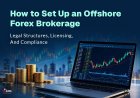
How to Set Up an Offshore Forex Brokerage: Legal Structures, Licensing, and Compliance
Creating an offshore forex brokerage firm entail choosing the correct jurisdiction, incorporation, securing the required license, and putting in place operating and compliance infrastructure. Seychelles, Mauritius, Vanuatu, and British Virgin Islands are some of the jurisdictions whose regulations could be favourable for forex brokerage operations depending on the relevant licenses.
Creating an offshore forex brokerage firm entail choosing the correct jurisdiction, incorporation, securing the required license, and putting in place operating and compliance infrastructure. Seychelles, Mauritius, Vanuatu, and British Virgin Islands are some of the jurisdictions whose regulations could be favourable for forex brokerage operations depending on the relevant licenses.
An offshore forex license provides the legal basis for regulated foreign exchange trading services. Incorporation does not, however, give an organization the authority to conduct forex brokerage activities or solicit clients from other nations.
This guide gives a detailed description of what you need to know concerning offshore forex brokerage set-up process, legal structures, licenses, and compliance issues.
What Is an Offshore Forex Brokerage?
An offshore forex brokerage firm is a company set up in a jurisdiction other than that of its owners or clients to conduct foreign exchange trading services.
Such firms usually enable clients to trade in currency pairs using trading software or liquidity providers among others.
Forex firms may take on the role of either intermediaries whereby they execute trades for their clients, or counterparties to their clients’ trades, depending on their business model.
The manner in which these transactions are classified legally differs from one jurisdiction to another.
For instance, in the case of forex brokers that provide leveraged forex contracts or CFDs, these brokers would be subject to laws governing securities, derivatives, or investment dealers instead of having to adhere to legislation restricting foreign exchange business.
Therefore, it is imperative for firms to determine their actual regulated activities before forming a forex business.
The Selection of the Right Overseas Forex Licensing Jurisdiction
When selecting an overseas jurisdiction, it is imperative to evaluate the licensing conditions, capital requirements, operational substance, costs, and ability to access international markets.
1. Seychelles
The FSA has the responsibility of regulating the activities of firms engaged in the business of securities dealing.
Companies that wish to sell forex products that qualify as regulated securities or derivatives must obtain a Securities Dealer licence in order to operate legally.
To be eligible for a licence, applicants are required to adhere to corporate governance, capital, management, compliance, and operational obligations.
Importantly, a Seychelles licence does not automatically allow brokers to conduct business with clients in other countries since this remains the responsibility of FSA.
2. Mauritius
The Financial Services Commission (FSC) of Mauritius regulates investment brokers based on the Securities Act 2005.
Depending on the activities intended to be undertaken, a forex broker may obtain an Investment Dealer licence with the appropriate derivatives licence.
There are various categories of investment dealer licences available in Mauritius, such as full-service dealer, broker, and derivatives licenses.
The necessary licence is determined by which functions are performed, such as whether the company receives orders, acts as a principal, or offers investment services.
3. Vanuatu
Vanuatu Financial Services Commission (VFSC) regulates financial brokers through the Financial Dealers Licensing Act.
Licensing procedures in Vanuatu involve a range of types of financial dealer authorizations and requirements covering key areas, such as management, physical presence, risk management, and compliance.
Amendment Act No. 5 of 2024 to the Financial Dealers Licensing Act provides additional changes in relation to the eligibility requirements for the license and the annual fee.
Candidates ought to examine the existing licensing types and conditions rather than sticking to outdated views regarding offshore licensing costs.
4. British Virgin Islands
In the British Virgin Islands, the Financial Services Commission oversees the regulation of investment businesses under the Securities and Investment Business Act, which was enacted in 2010.
Depending on their activities, firms in the forex industry that deal with regulated investment products may require investment business authorization.
However, simply forming a BVI Business Company does not imply that it can use its license for brokered forex transactions.
It is necessary that company’s operations fall under the regulation of investment businesses in the BVI.
Legal Structures for Offshore Forex Company Formation
The proper legal structure depends on the country of incorporation, ownership patterns, and regulatory regulations.
Limited Liability Company
A limited liability company or equivalent entity is commonly established to set up a forex brokerage.
A separate legal personality is conferred by the firm, and it gives the privilege to enter a contract, hire employees, and engage in commercial relationships.
Nevertheless, this does not exempt one from obtaining a license in order to conduct some regulated activities.
International Business Company
Offshore jurisdictions sometimes allow incorporation through international business company structures, or equivalent entities.
Such structures could offer flexibility in terms of ownership and international business operations.
However, an international business company registration should never be mistaken for a financial service licenses.
Holding Company and Operating Subsidiary
Bigger forex businesses may establish a holding company with separately licensed operating subsidiaries.
One such example is that a holding company can hold the intellectual property and shares of a regulated brokerage subsidiary.
Such arrangements can ease corporate governance and international expansion. However, transactions between related entities would need to comply with pertinent outsourcing, tax and regulatory requirements.
Licensing Requirements for Offshore Forex Brokers
Even though licensing requirements may vary from one jurisdiction to another, regulators usually focus on the financial strength of the applicant, their ownership structure, management, and operational readiness.
Financial Capacity of Application
In accordance with the licensing framework, applicants must maintain the minimum capital required.
The amount of capital is determined by jurisdiction, license category, and nature of work carried out.
Businesses must also prove that they possess sufficient financial capabilities for covering their expenses and meeting obligations to customers.
Corporate Governance
Regulators may require qualified directors, compliance officers, and other responsible employees from companies.
Applicants are required to present information of beneficial ownership and show that their management board meets the necessary level of fitness and propriety.
Some jurisdictions may require availability of local offices, staff and management.
Technology and Trading Frameworks
Forex Brokers must develop efficient systems for trading that necessitate appropriate operational control mechanisms.
This includes trading platforms, liquidity solutions, order execution systems, cyber-security, and processes for business continuity.
Regulatory authorities may look into the procedures adopted by the broker for successfully dealing with pricing, execution, conflicts of interests, and operational risks involved in trading.
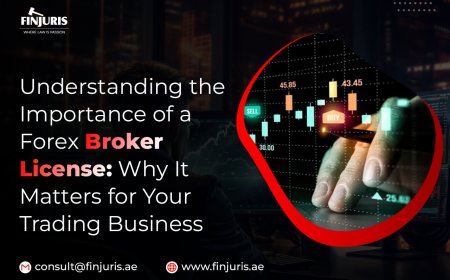
Read More: Understanding the Importance of a Forex Broker License: Why It Matters for Your Trading Business
Method of Setting Up an Offshore Forex Brokerage: Stage by Stage
The offshore forex business set-up process usually consists of six stages.
Stage 1: Specify the Business Model
Decide on whether the brokerage would be running by an agency model or acting as the principal to customer deals or, perhaps using a combination of several execution schemes.
The business should also know about its products, such as spot forex, leveraged foreign exchange trading, and CFDs.
It is important to note that these differences will affect the regulations and licensing of the forex brokerage.
Step 2: Choose the Jurisdiction
Evaluate the possible jurisdictions regarding their licensing requirements, capital levels, local presence requirements, license costs, and target markets.
The jurisdiction chosen must be favourable to the business.
Step 3: Create the Company
Register an appropriate legal business entity and prepare the needed paperwork.
This usually entails the identification of shareholders and beneficial owners, the preparation of corporate documents, and the nomination of directors.
Step 4: Ensure License Application
Submit the necessary application to the financial regulator.
Documents might include a business plan, financial forecasts, proof of funding, compliance policies, and information about the technology providers.
Step 5: Set Up Operating Infrastructure
Get banking and payment services, trading platforms, liquidity providers, customer service, and risk management in place.
Additionally, the broker must have procedures in place for the management of customer cash and transactions.
Step 6: Get Approval and Begin Operations
The regulator examines the application and might request more information.
When the necessary licenses and approvals have been procured, the broker can commence operations.
Read More: Navigating the Forex Landscape: Understanding Forex Broker License and Forex Business License
Compliance Obligations for Offshore Forex Brokers
Getting a license does not remove the need for compliance.
AML and Customer Due Diligence
Forex brokers must comply with all relevant anti-money laundering and counter-terrorism financing regulations.
These regulations usually include customer verification, verification of ownership, sanction limitation, transaction control, and reporting obligations of evidence of suspicious activity.
The Financial Action Task Force suggests a different approach to the use of AML and CFT in the financial industry.
Protecting Client Funds
When brokers hold customer funds, they must comply with applicable and proper means of protecting and segregating funds.
Proper control would be the reconciliation of the client accounts and the procedure for withdrawals, and the limitation on the use of client funds.
Risk Management and Protection of Investors
Using leverage when trading on the forex market means that the customers are exposed to a great deal of risks.
Brokers must have adequate means of leverage control, margin requirements, risk disclosure, complaints process, and the management of possible conflicts of interests.
For instance, the Financial Conduct Authority of Dame sends different restrictions for CFD marketing.
Cross-Border Compliance
Having an offshore forex license does not, in itself, allow brokers to operate internationally.
It is necessary for businesses to investigate licensing requirements, as well as promotional activity in every jurisdiction in which they plan to operate.
For example, selling leveraged forex products to clients in the UK may require FCA authorization, even if the broker has incorporated offshore.
Read More: Forex License Dubai: Comprehending the UAE’s Forex License Environment
What is the Cost of an Offshore Forex License?
The cost of obtaining an offshore forex license varies depending on a variety of factors, including jurisdiction, regulated activities, and operational structure.
Costing usually includes such expenses as company formation fees, regulatory license application fees, annual monitoring costs, minimum capital, professional consultancy services, and compliance infrastructure.
Costs may also incur related to trading technology, liquidity provision, banking, payment processing, office space, and personnel.
Businesses should differentiate between the regulated capital that must be held, and fees or costs that need to be paid.
Read More: All You Need to Know About Forex Business Licensing in Dubai and Avoiding Pitfalls
Frequently Asked Questions
1. What are the countries that provide offshore forex licenses?
The countries that offer a regulatory framework suitable for forex brokerage are Seychelles, Mauritius, Vanuatu, and British Virgin Islands. A suitable license may vary based on the services offered by the business.
2. Can firms do forex trading without acquiring a license?
The mere existence of the company is not sufficient to allow the business to operate as a regulated forex broker. It is advisable for a business looking to provide financial services to check the regulations applicable to such services in the area where it intends to operate.
3. What is the offshore forex licensing timeline?
The duration of offshore forex licensing may be dependent on different things. It is recommended that a company seeks consultation from a jurisdiction-specific expert rather than trying to estimate the duration required for licensing.
4. Can an offshore forex broker accept international clients?
An offshore licence does not provide unrestricted international market access. Brokers must assess the applicable licensing, marketing, and investor protection requirements in each jurisdiction where they intend to serve customers.
What's Your Reaction?