Real World Asset Tokenization in the UAE: Legal and Regulatory Requirements
Tokenization of real-world assets (RWA) is one of the most important innovations in digital finance today.
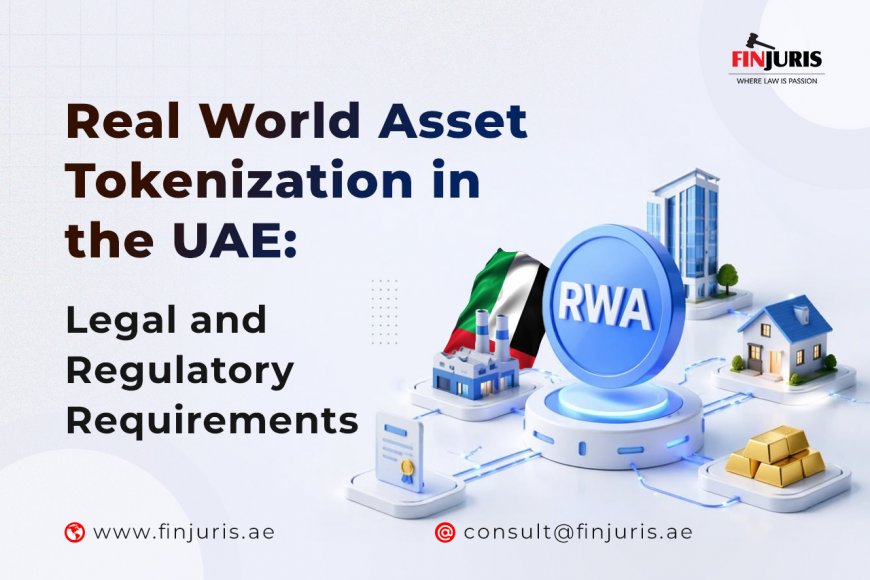
Tokenization of real-world assets (RWA) is one of the most important innovations in digital finance today. Real estate, private equity, bonds, commodities, and various investment funds are among many other assets that can now be tokenized using blockchain technology, thus increasing their liquidity and ease of management.
With the rise in institutional adoption of tokenization, the UAE has established itself as one of the leaders in this area by creating a progressive yet strict regulatory system. In the UAE, rather than following a single rule for all kinds of assets, the country regulates tokenization activities via various authorities according to the type of the asset, the activity performed, and the jurisdiction where the business operates.
This article will examine RWA tokenization regulations in the UAE, the regulatory framework of tokenized assets, and compliance requirements for tokenization projects.
Understanding the Tokenization of Real-World Assets (RWAs)
Real world asset tokenization is the process through which ownership interests or any economic rights related to a physical asset or financial instrument are converted into blockchain-based digital tokens.
Examples of assets that can be tokenized are:
- Real estate
- Government bonds
- Private equity
- Funds
- Precious metals
- Commodities
- Carbon credits
- Intellectual property rights
- Infrastructure assets
A token essentially indicates a specified legal interest in an asset and enables transfer of ownership of this interest via digital means.
Tokenization of real-world assets (as opposed to cryptocurrencies) has significant regulatory implications owing to the underlying assets.
Why Is the UAE Emerging as a Global Asset Tokenization Hub?
One of the most prominent digital assets and blockchain jurisdictions in the world, the UAE has succeeded by offering an innovative and regulated environment.
Some of the reasons behind that success:
- Specific virtual asset regulations
- Financial free zones
- High standards of protection of investors
- AML/KYC legislation
- Access to international financial markets
- Government blockchain-friendly policies
In addition, instead of regulating blockchain technology directly, UAE regulators focus on the characteristics of the token and activities related to the issuance, custodianship, trading, and investment.
Asset Tokenization Legislation in the UAE
Unlike other countries, the UAE does not have a unified set of rules for the tokenization of assets. The rules will be decided by:
- The kind of underlying asset
- If the token is a security
- The jurisdiction of the issuer of the token
- The type of services
- Investors
Regulatory bodies in UAE include:
VARA (Dubai)
The Virtual Assets Regulatory Authority (VARA) oversees virtual asset activities in Dubai (excluding DIFC).
Businesses involved with tokenized assets may be required to get licensed in case of any of the following activities:
- Virtual asset issuance
- Brokering or dealing with virtual assets
- Virtual asset exchange services
- Custody
- Lending
- Transfer services
- Investment services
In case the tokenized assets come under the purview of regulated virtual assets, then licensing will be necessary under VARA.
ADGM – Financial Services Regulatory Authority (FSRA)
ADGM's FSRA has one of the world's most developed digital asset regulations.
This includes regulation of:
- Digital securities
- Virtual assets
- Digital asset exchanges
- Custodians
- Market operators
- Token issuers
Any businesses tokenizing securities or financial instruments in ADGM are governed by FSRA Digital Securities and Virtual Asset regulations.
DIFC – Dubai Financial Services Authority (DFSA)
In Dubai International Financial Centre, crypto tokens and tokenized financial instruments are regulated by the DFSA under its developing digital asset regime.
Crypto Token Businesses have to perform suitability assessments among other governance and custody requirements.
Legal Requirements of RWA Tokenization
Legal requirements of RWA tokenization depend on the structure of the project and include at least some common duties.
#1. Structure of Legal Ownership
Issuer should be able to prove:
- Ownership of an asset
- What kind of rights is granted for token holders
- Custody
- Mechanism of redemption
- Segregation of assets
This legal structuring should provide clear proof that blockchain tokens relate to legitimate off-blockchain property rights.
#2. Required Licenses
Issuer might need regulatory approval depending on whether they engage in regulated activities like:
- Investment products
- Securities
- Virtual assets
- Custody
- Brokerage
- Exchange operations
Launching the platform for tokenized assets without required licenses makes businesses subject to regulation.
#3. AML and KYC Compliance
All tokenized assets projects that come under regulation will have to put in place AML/CFT measures that include:
- Customer due diligence
- Enhanced due diligence
- Risk assessment
- Transaction monitoring
- Sanctions check
- Suspicious activity reporting
- Retention of records
The above is all consistent with the UAE’s AML laws and the guidelines of FATF.
#4. Corporate Governance
Businesses will be expected to have corporate governance structures in place that include:
- Independent management
- Controls
- Compliance officer
- Risk management policy
- Board oversight
- Cyber security
Corporate governance is key to protecting investors.
#5. Disclosure Obligations
Sufficient information on:
- Value of assets
- Token rights
- Risk factors
- Custodial details
- Fees
- Redemption process
- Technical risks
will be provided to investors.
Asset Tokenization Compliance in UAE
Being compliant with regards to asset tokenization compliance in the UAE goes much further than having obtained your licence in the first place.
Firms need to continually check on:
- AML compliance
- KYC requirements
- Cybersecurity
- Smart contract security
- Custody management
- Operational resilience
- Regulatory reporting
- Financial crime detection
- Governance assessments
Regulators expect that digital asset firms implement compliance systems similar to what other financial companies have done.
Potential Legal Issues with Tokenized Assets
The legal complexities associated with the process of tokenization are often underestimated by businesses.
Some of the common issues include:
- Ownership rights ambiguity
- Regulatory conflict in different jurisdictions
- Securities classification
- Weaknesses in smart contracts
- Possession risks
- Valuation issues
- Insolvency procedures
- Investor protection issues
Thus, legal structuring must precede token creation rather than follow it.
Practical Issues to Be Addressed Prior to Implementing an RWA Initiative
Prior to launching any tokenized security, firms should consider the following:
- Does the token amount to a regulated security?
- Jurisdiction within UAE
- Licensing issues
- Asset custody
- Smart contract audit
- AML framework
- Taxation issues
- Eligibility of investors
- Restrictions on secondary market
- Rules for cross-border promotion
This will greatly reduce regulatory risks.
Future of Tokenization Regulations UAE
The future of tokenization regulations UAE will depend on the continued institutional embracement of blockchain technology and need for regulated digital investment products. The development of tokenization from pilot programs to becoming a common feature within the finance industry means that the UAE regulators will keep fine-tuning the existing regulations to ensure that they cater for new issues as they emerge.
The regulators like VARA, the FSRA, and DFSA have shown through their various frameworks the desire to establish regulatory pathways for digital assets. This framework has been updated over time to allow for things like tokenized securities, stablecoins, real estate tokenization, digital investment funds, and other forms of financial instruments based on the blockchain technology. The UAE will also be keen to align itself to the best practices as issued by organizations like FATF and IOSCO.
Another trend worth mentioning is the increasing involvement of traditional financial institutions in tokenized markets. There have been an increasing number of efforts by banks, asset managers, custodians, and providers of financial market infrastructure in developing blockchain technology in relation to asset issuance, settlement, and custody. It is quite possible that this involvement from traditional financial institutions would drive regulators to come up with more specific guidelines on issues like governance standards, operational resiliency, disclosures, custody, smart contracts audit, and investor protection.
International interoperability is also expected to become a significant concern. The ability to trade tokenized assets internationally would require further development of frameworks by regulators that would ensure international investments while complying with securities, AML, and consumer protection regulations in various jurisdictions.
With the evolution of the ecosystem, those companies that have put in place a compliance program, proper governance framework, disclosure mechanism, and good risk management strategy shall thrive in the favourable regulatory regime available in the UAE. Instead of seeing compliance as a regulatory requirement, companies need to see it as a competitive edge that fosters confidence of investors in the ecosystem.
Tokenization of real assets has the potential to completely revolutionize how assets are created, owned, traded and issued thanks to the marriage of blockchain technology with traditional financial and physical assets. Whether by increasing market liquidity, allowing fractional ownership of assets, widening investment options, or streamlining inefficiencies, tokenization is opening new worlds in many industries.
UAE has realized the importance of tokenization and has made itself one of the top destinations for digital asset innovations due to its strict regulatory control. Instead of sticking to a single regulatory legislation, the UAE has devised a multi-regulator approach where tokenization is regulated based on the type of asset being used, the operations taking place, and the risks associated.
The legal requirements relating to the tokenization of RWA, having proper governance, and anti-money laundering (AML) framework, and choosing the right jurisdiction are crucial for success in any tokenization process. With tokenization regulation UAE developing further, those organizations that have always focused on compliance will have an advantage in the future.
What's Your Reaction?