Dubai · DIFC · DFSA Regulated · Tier One

Forex License in the DIFC

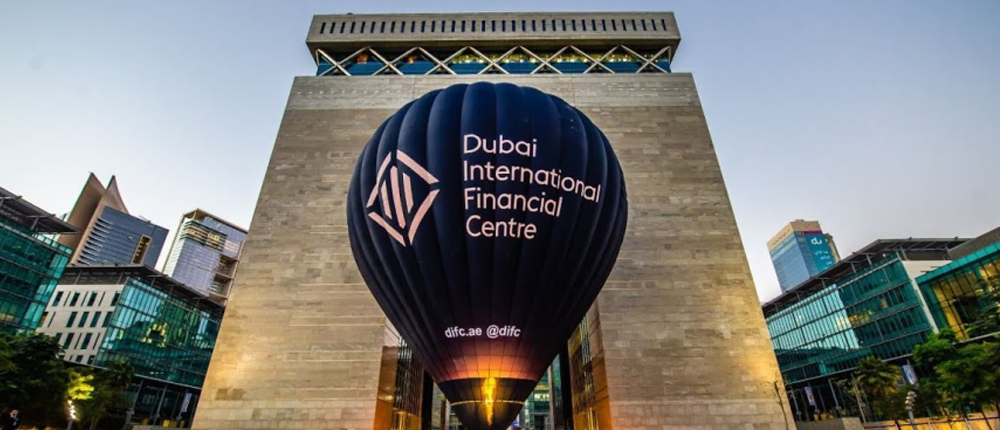
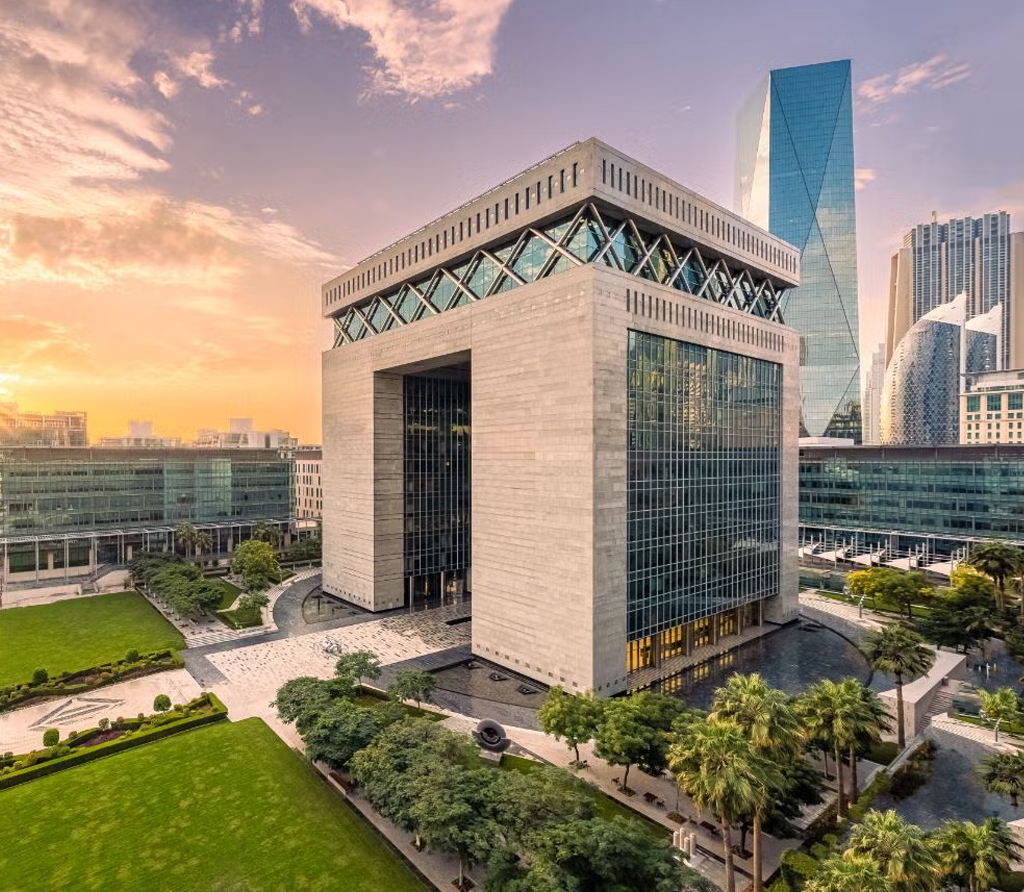
Finjuris advises brokers on DFSA authorisation within the Dubai International Financial Centre — the Middle East’s pre-eminent financial centre and a base for serving institutional and regional markets with full regulatory standing. As a UAE-based advisory, we guide this process from within the jurisdiction.
12–14
Months (Cat. 3A)
$200K
Cat. 3A Base Capital
0%
Tax on Qualifying Income
GCC+
Regional Recognition
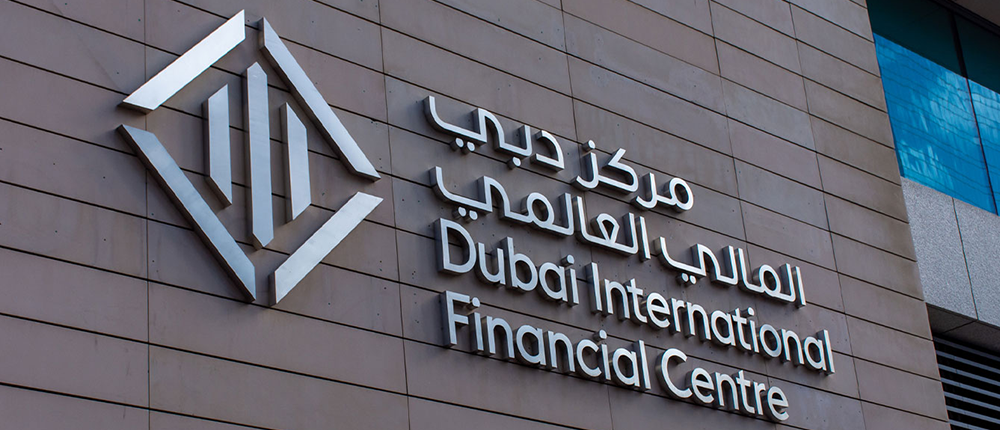
The Dubai International Financial Centre (DIFC) is a financial free zone with its own English-language common-law legal system, independent courts and a dedicated regulator, the Dubai Financial Services Authority (DFSA). For a forex or CFD operator, DFSA authorisation provides something no offshore registration can: a tier-one Middle Eastern license, recognised by institutional counterparties and banks, within one of the world’s leading financial hubs.

It is a demanding authorisation requiring real substance, capital and governance — and for firms whose objective is credibility and regional presence rather than the lowest cost of entry, it is the standard against which the alternatives are measured.

Overview

Understanding DFSA Authorisation

A forex or CFD broker in the DIFC must be an Authorised Firm holding a DFSA license with permission to carry on the relevant Financial Services — principally Dealing in Investments as Agent and, where the firm acts as a matched principal, Dealing in Investments as Principal. The license is structured by category, each carrying its own permitted activities and capital requirement.

DFSA authorisation differs from offshore registration in three respects that define its value: it requires substantive presence in the DIFC; it imposes meaningful capital and prudential standards including an ICAAP; and it embeds individual accountability, with named, DFSA-approved individuals responsible for defined functions.

Capital Requirements

License Categories for Forex and CFD Firms

The category appropriate to a brokerage depends on whether it deals as agent, as a matched principal, or as a full principal (market maker). The base capital figures below should be read alongside the DFSA’s 2025–2026 prudential reforms.

CategoryBase CapitalPermitted Activity (Forex / CFD)
Category 4 From US$10,000 Arranging and advising only — no dealing, no holding of client assets. Suited to introducers and advisers.
Category 3A US$200,000 Dealing as Agent and as Matched Principal — the DIFC equivalent of a full brokerage license, including, with endorsement, holding client assets and serving retail clients.
Category 2 US$2,000,000 Dealing as Principal (market maker) — taking the other side of client trades; the highest capital and supervisory intensity.
2025–2026 Prudential Reforms

How Capital Is Actually Calculated

The base capital figures are floors, not final answers. A firm’s total capital requirement is the highest of: Base Capital Requirement (BCR); Expenditure-Based Capital Minimum (EBCM) where applicable; and Activity-Based Capital Requirements (ABCR) where applicable.

Phase 1 (1 July 2025) removed the EBCM for Category 3 firms not holding client assets and removed the mandatory ICAAP/IRAP for Category 3A firms. Phase 2 (1 July 2026) introduces ABCR for Category 3A, 3B and 3C firms, a 20% capital buffer for Category 3A, and revised capital composition requirements including CET1 and Tier 1 ratio requirements. Finjuris advises on the applicable total requirement for your model before you apply.

Which DFSA category fits your model?

Request a Structuring Assessment
Jurisdiction Advantage

Why Establish in the DIFC?

Regional Tier-One Recognition

A DFSA license is recognised across the GCC, MENA and beyond — the credibility that offshore registrations cannot provide, recognised on sight by institutional counterparties.

English Common-Law Courts

The DIFC operates its own civil and commercial laws and independent courts, familiar to international counsel and counterparties worldwide.

Banking & Institutional Access

Prime-broker relationships, institutional mandates and banking are materially more accessible to a DFSA-authorised firm than to any offshore alternative.

Deep Financial Hub

Proximity to a deep concentration of banks, asset managers and capital within a single centre — the Middle East’s pre-eminent financial address.

0% on Qualifying Income

Access to a 0% corporate-tax rate on qualifying income for a Qualifying Free Zone Person, subject to conditions (see Tax section below).

No Capital / Profit Restrictions

No restrictions on capital or profit repatriation and no currency-exchange controls.

Compliance Checklist

What the DFSA Will Expect

The DFSA authorises firms that demonstrate substance, competent governance and adequate financial resources.

ExpectationIn PracticeWhy It Matters
A DIFC Entity A company incorporated in the DIFC with the DIFC Registrar of Companies. The authorised legal entity, within the DFSA’s jurisdiction.
Physical Office in the DIFC Office space in the DIFC from which the financial activity is conducted. Substance is mandatory; the DFSA does not authorise letterbox firms.
Regulatory Capital Base capital by category, or the higher ABCR amount (from 1 July 2026), set in the capital plan. Financial resilience appropriate to the activity and category.
ICAAP An Internal Capital Adequacy Assessment Process documenting the firm’s capital plan and risks (requirements reformed under Phase 1, July 2025). The basis on which the DFSA assesses capital adequacy.
Senior Executive Officer An SEO ordinarily resident in the UAE, with substantial relevant experience. Accountable on-the-ground leadership of the firm; DFSA-approved before operations begin.
Mandated Function Holders A Finance Officer, Compliance Officer and Money Laundering Reporting Officer (UAE-resident), and an appropriately constituted board with a non-executive chair. Individual accountability across the key control functions.
Client-Asset Arrangements Where client money or assets are held, a DFSA client-assets endorsement and segregation arrangements. Investor protection where the firm holds client property.
AML/CTF Framework An AML and counter-terrorist-financing framework supervised by the DFSA. A core DFSA supervisory responsibility within the DIFC.
Regulatory Business Plan A detailed business plan, financial projections and systems-and-controls documentation behind every permission sought. The DFSA assesses a fully prepared firm, not a concept.
The Authorisation Process

From Preparation to License

DFSA authorisation proceeds through preparation, submission, an in-principle approval and final licensing. Realistic timing for a Category 3A brokerage is in the region of twelve to fourteen months, reflecting the depth of the DFSA’s review. Finjuris manages the process throughout.

Stage 1

Preparation

Months 1–3
  • Incorporate the DIFC entity, secure office space and identify the SEO and mandated function holders.
  • Confirm the category and permissions and begin building the regulatory business plan.
Stage 2

Application

Months 3–6
  • Submit the regulatory business plan, ICAAP, financial projections and the authorisation forms for the firm and its key individuals.
Stage 3

DFSA Review

Months 6–12
  • Respond to the regulator’s questions and interviews of authorised individuals.
  • Receive an in-principle approval setting out conditions to be met before final licensing.
Stage 4

Final Licensing & Launch

Months 12–14
  • Satisfy the conditions — including capital remittance and a DIFC bank account.
  • Receive the license and commence operations.

Timelines are practical estimates; the DFSA engages in detailed dialogue with applicants, and the depth of preparation determines how efficiently the process proceeds.

Map your DIFC authorisation timeline.

Speak to Finjuris
Tax Treatment

Taxation in the DIFC

ElementRate
Qualifying Income (QFZP) 0%
Non-Qualifying Income 9%
Standard UAE Corporate Tax 9%
Personal Income Tax 0%
VAT 5%

Qualifying Free Zone Person (QFZP) status — which allows the 0% rate on qualifying income — depends on satisfying all of its cumulative conditions: adequate DIFC substance, deriving qualifying income, transfer-pricing compliance, audited financial statements, remaining within de minimis limits for non-qualifying income, and not electing out.

Failing any condition results in the loss of QFZP status, with the 9% rate applying to all income for the relevant year and the following four. The treatment is valuable but must be structured and maintained deliberately. Finjuris models the position for your activity.

This is general information, not tax advice. Outcomes depend on substance, the nature of income and the rules in force at the time; obtain tailored advice before relying on any figure.

Our Approach

Why Work With Finjuris for DIFC

DFSA authorisation rewards thorough preparation and on-the-ground understanding of the DIFC. As a UAE-based advisory experienced across financial-services and crypto-asset licensing, Finjuris is positioned to manage it from within the jurisdiction.

Readiness Assessment First

We confirm whether your capital, people and model meet the DFSA’s expectations — and advise on the appropriate category before you commit to the process.

Substance & Key Individuals

We assist in establishing DIFC substance and assembling an approvable SEO and mandated function holders — frequently the determining factors in a successful application.

A Complete Application

The regulatory business plan, capital analysis and supporting documentation prepared to the standard the DFSA expects — including the 2025–2026 prudential reform framework.

Tax Structuring

We address Qualifying Free Zone Person status alongside the license, so the tax position is supportable from the outset and maintained correctly as the business operates.

A Single Point of Contact

Authorisation, banking, AML and data-protection compliance and dispute support, coordinated locally as your DIFC brokerage develops.

FAQ

Frequently Asked Questions

It is authorisation by the Dubai Financial Services Authority (DFSA) as an Authorised Firm with permission to deal in investments — including forex and CFDs — within the Dubai International Financial Centre. The permitted activities and capital depend on the license category.

A broker dealing as agent or matched principal generally needs a Category 3A license (the DIFC equivalent of a full brokerage). A market maker dealing as principal needs Category 2. A firm that only advises or arranges needs Category 4.

Yes. A physical DIFC office and resident senior management are mandatory, including a UAE-resident Senior Executive Officer and Money Laundering Reporting Officer, alongside Finance and Compliance Officers and a properly constituted board.

For a Category 3A brokerage, realistically around twelve to fourteen months, reflecting the depth of the DFSA’s review. Preparation quality is the main determinant of how smoothly the process runs.

A DIFC firm is within the UAE’s 9% corporate-tax regime, but a Qualifying Free Zone Person can access 0% on qualifying income, with non-qualifying income taxed at 9%. There is no personal income tax. QFZP status is conditional and must be maintained.

Yes — a DFSA license carries standing across the GCC and wider MENA region and supports institutional and regional client relationships, subject to the rules of each market served.

The DIFC (DFSA) and Abu Dhabi’s ADGM (FSRA) are both tier-one common-law financial-centre regulators; the onshore SCA regulates the UAE mainland under a different framework. The right choice depends on your client base, location and objectives — we advise across all three.

Phase 1 (1 July 2025) removed the EBCM for Category 3 firms not holding client assets and removed the mandatory ICAAP/IRAP for Category 3A firms. Phase 2 (1 July 2026) introduces Activity-Based Capital Requirements for Category 3A, 3B and 3C firms, a 20% capital buffer for Category 3A, and revised capital-composition requirements including CET1 and Tier 1 ratios.
Get Started

Build Your DIFC Brokerage With Finjuris

Finjuris supports clients throughout the DFSA licensing process, from regulatory strategy and DIFC company formation to governance documentation, regulatory submissions and ongoing compliance. Our UAE-based team provides a single point of contact from initial consultation through to authorisation.

Build your brokerage in the region’s leading hub.

Request a Free Consultation