Finjuris provides end-to-end legal and regulatory support for securing your Latvian Investment Firm license — an EU-passportable, MiFID II authorisation with one of Europe’s most distinctive corporate tax regimes: 0% on retained profits, tax only when you distribute.
Latvia is an increasingly attractive EU base for forex and CFD brokerages — a full MiFID II investment-firm license that passports across the entire European Economic Area, a modern Baltic financial centre, competitive operating costs, and a corporate tax system that does not tax retained profits. As a Tier-1 European authorisation it is more demanding than offshore alternatives and far more valuable where you need real regulatory standing and access to regulated European markets. Finjuris manages the full pathway, structured to the current 2026 framework.
The “Latvia forex license” is, in law, authorisation as an Investment Firm under the Financial Instruments Market Law, which transposes the EU MiFID II framework. A licensed investment firm may provide defined investment services including receiving, transmitting and executing client orders in forex and CFDs, and (at higher tiers) dealing on own account.
Once licensed, the firm can serve clients across the EEA by notification, without a separate license in each member state.
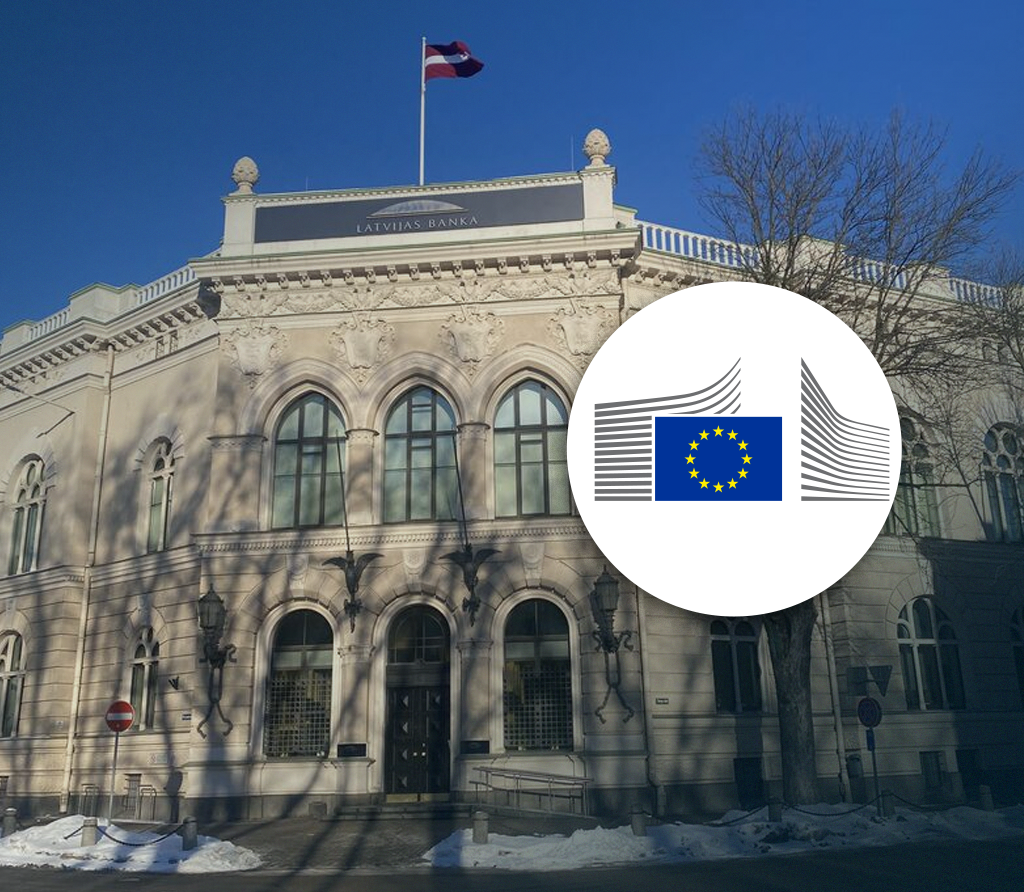
Latvia’s financial supervisor is now the Bank of Latvia (Latvijas Banka). The former Financial and Capital Market Commission (FCMC) was integrated into the Bank of Latvia on 1 January 2023, and all supervision, authorisation and resolution functions now sit there. Guidance still referring to the “FCMC” is out of date.
Since the 2018 reform, Latvia’s corporate profits are not taxed when earned or retained — taxation is deferred until profits are distributed. Reinvested earnings are effectively taxed at 0%.
When profits are distributed, a 20% rate applies after a 0.8 coefficient — an effective rate of 25% on the net amount distributed. For a brokerage reinvesting earnings into platform, liquidity and capital, the 0% rate is a real growth-stage advantage, not a permanent escape from tax.
Latvia and Estonia share this model. It is not a low-tax jurisdiction in the offshore sense — it is the place to compound. Distributions are taxed at an effective 25% when they happen. Finjuris models your distribution plans so the advantage is real for your stage.
Serve clients across all 30 EEA states from one authorisation by notification — without separate national licenses or local offices in each market.
Latvia’s distinctive regime taxes corporate profit only when distributed. Reinvested earnings are not taxed — a powerful advantage for a growing brokerage.
A MiFID II license supervised by an EU central bank, readily recognised by banks, liquidity providers and institutional partners worldwide.
Client-money segregation, MiFID II conduct standards and a national investor-compensation scheme strengthen your client proposition.
Operating and talent costs typically lower than Western European financial centres, with an established Baltic financial sector.
Where an initial application is refused, deficiencies can be addressed and the application resubmitted — an unusual formal pathway in the EU.
Under the EU IFR/IFD regime, the initial-capital requirement depends on the investment services provided. The three statutory tiers are the same across the EU; the figure is a floor, and the Bank of Latvia will require additional own funds based on your business plan and IFR K-factor methodology.
| Class | Initial Capital | Scope |
|---|---|---|
| Class 3 (Limited) | EUR 75,000 | Reception and transmission of orders, execution, portfolio management and/or investment advice without holding client money or financial instruments. |
| Class 2 (Standard / STP) | EUR 150,000 | The above services where the firm holds client money or financial instruments (e.g. an STP brokerage). |
| Class 1 (Full / Market Maker) | EUR 750,000 | All MiFID services including dealing on own account and underwriting / placement on a firm-commitment basis. |
Competitor figures of EUR 50,000 / 125,000 / 730,000 reflect the pre-2021 regime and are out of date. The IFR/IFD tiers (EUR 75K / 150K / 750K) replaced them in June 2021. Initial capital shall be fully paid up in cash — intangible assets cannot be used — and evidenced to the regulator.
| Requirement | Specification | Why It Matters |
|---|---|---|
| Latvian Company | A company incorporated in Latvia to hold the investment-firm license. | The licensed legal entity; EU/EEA ownership is straightforward. |
| Real Local Office & Substance | A genuine, fully operational office in Latvia, with proper bookkeeping and reporting. | Substance is mandatory; a nominal presence is not accepted. |
| Initial Capital | EUR 75,000 / 150,000 / 750,000 by class, fully paid up (no intangible assets), with ongoing own-funds and large-exposure limits. | A statutory floor; the regulator requires more based on the business plan and K-factors. |
| Resident Management | At least two resident senior managers/directors with relevant qualifications and 3–5 years’ experience. | Demonstrates local management competence. |
| Fit-and-Proper Owners | Shareholders with an unblemished reputation; 10%+ shareholders shall evidence sector expertise and source of funds. | Integrity and suitability screening of all controllers. |
| Governance & Controls | Defined management structure, internal audit, compliance and risk-management systems. | Core MiFID II organisational requirements. |
| DORA / ICT Resilience | A documented ICT and operational-resilience framework with incident-reporting procedures. | Mandatory for EU financial firms since January 2025. |
| Client Protection | Segregation of client funds, client categorisation (retail/professional) and investor-compensation-scheme participation. | MiFID II investor-protection obligations. |
| Business Plan & Financials | A three-year strategy with profit/loss forecasts and fixed-cost projections, plus a recent balance sheet. | The basis on which the regulator assesses viability and capital. |
| Due-Diligence Pack | Personal data, qualifications, experience records and source-of-funds documentation for all key persons. | Fit-and-proper verification of all key persons. |

MiFID II sets a six-month assessment period from a complete application; allowing for incorporation, preparation and regulator queries, the realistic end-to-end timeline is several months to around a year. Finjuris manages all four phases.
| Element | Rate | Notes |
|---|---|---|
| Retained / Reinvested Profits | 0% | No corporate tax until profits are distributed. |
| Distributed Profits (Dividends) | 20% | Applied after a 0.8 coefficient — an effective rate of 25% on the net amount distributed. |
| Capital Gains | Within CIT base | Generally taxed only on distribution, as part of the deferred-distribution model. |
| EU Framework | MiFID / passporting | Full EU treaty and single-market access. |
This is general information, not tax advice. Outcomes depend on your distribution policy, residence and the rules in force at the time; obtain tailored advice before relying on any figure.
A MiFID II license is among the most demanding authorisations, and the Latvian regime is widely misdescribed online — from the defunct “FCMC” to the outdated capital figures. Finjuris manages the full pathway to the current standard.
Incorporation, substance, capital, the full governance and policy suite, fit-and-proper filings, Bank of Latvia liaison and EEA passporting — managed as one end-to-end engagement.
We apply the 2026 framework: Bank of Latvia as regulator, IFR/IFD capital tiers, DORA and the deferred-distribution tax model — not outdated information.
We build genuine economic substance from the outset, so the firm withstands regulator and bank scrutiny throughout its life.
We help you weigh Latvia against other EU and offshore options and structure them together where a phased market entry makes sense.
Tell us about your project and our regulatory team will confirm the right license class, structure and timeline for your brokerage — built to the current Bank of Latvia, IFR/IFD and DORA framework, with a single point of contact from first call to EEA launch.